





Power supplies for LED strip
LED lighting has become the de facto standard, and LED strip is the main tool for architectural and decorative light: perimeter lighting, light lines, floating stretch ceilings, niche and work-area lighting. But the strip is only the emitter. Its brightness, stability, service life and even electrical and fire safety are determined not by the strip itself but by the source that powers it.
A power supply converts the 220–230 V mains AC voltage into the stabilised DC voltage (12, 24 or 48 V) that LEDs need. Everything else depends on the quality of this conversion: whether the light is even and flicker-free, whether the system withstands peak loads, whether the driver fails at the first mains voltage surge. An underrated “cheap” unit is the most common cause of dim light, ripple, overheating and premature strip degradation.
In stretch ceilings the cost of a mistake is higher than anywhere else. The power supply is usually hidden — behind the membrane, in a service niche or a curtain track. Replacing a faulty unit means dismantling part of the ceiling. So for stretch structures a power supply is not a “throw-in accessory” but a piece of engineering infrastructure, chosen by calculation, with a reserve and for the specific installation conditions.
Types and architecture of LED strip power supplies
Almost all modern LED strip units are switch-mode power supplies (SMPS) with a stabilised output voltage (constant voltage). This fundamentally distinguishes them from constant-current LED drivers, which power individual high-power LEDs and arrays. LED strip has built-in current-limiting resistors and is designed for a constant voltage, so it needs a CV unit, not a CC driver. Confusing these classes is a typical selection mistake.
A quality switch-mode supply is distinguished by several engineering parameters:
High efficiency — less heat loss, lower temperature, longer life.
Low ripple — stable luminous flux without visible or invisible flicker.
A full set of protections: short circuit (SCP), overload (OLP/OCP), overvoltage (OVP) and overheating (OTP).
Cooling type — passive (fanless, silent) or active; for residential stretch ceilings it is critical that the unit runs quietly.
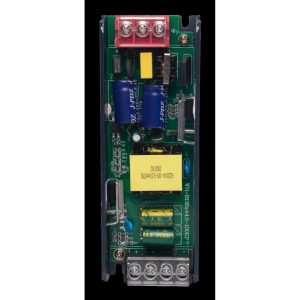
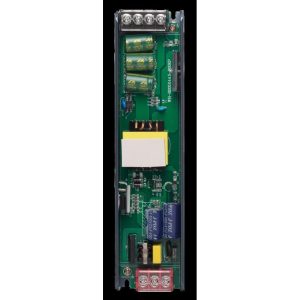
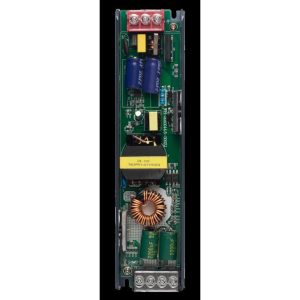
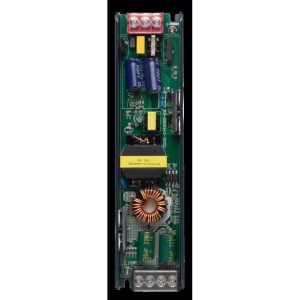
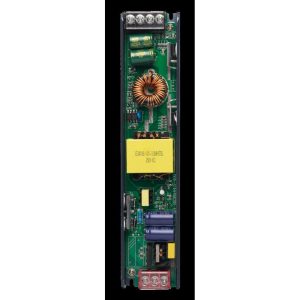
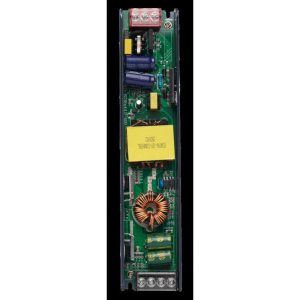
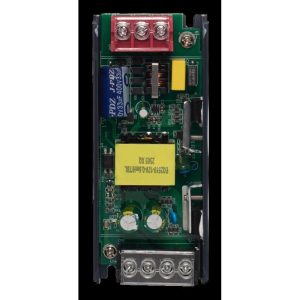
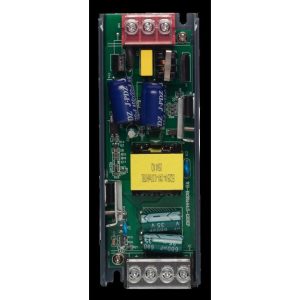
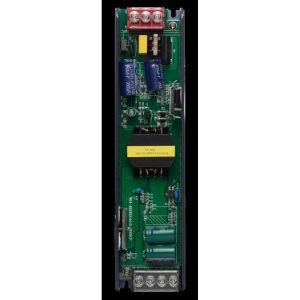
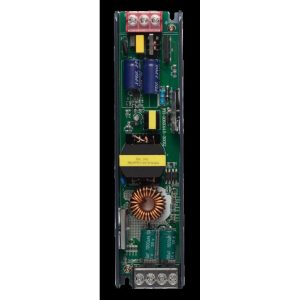
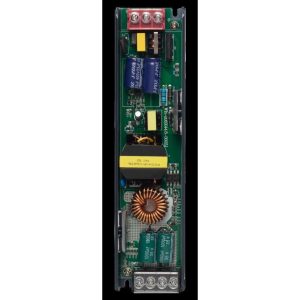
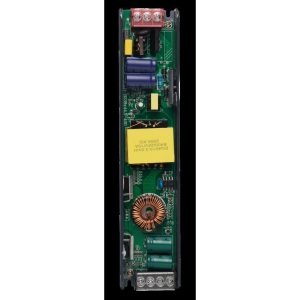
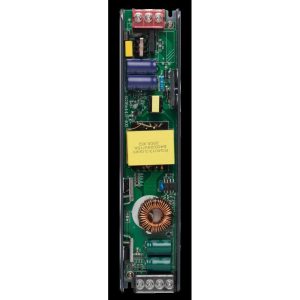
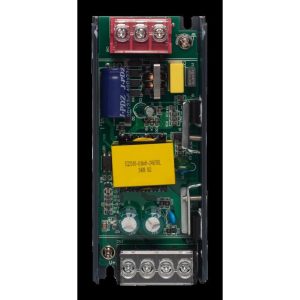
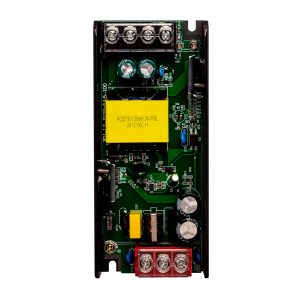
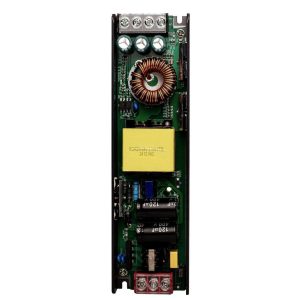
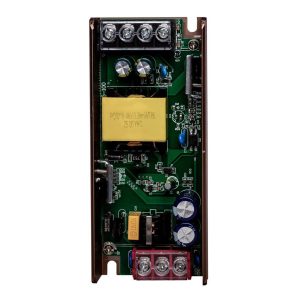
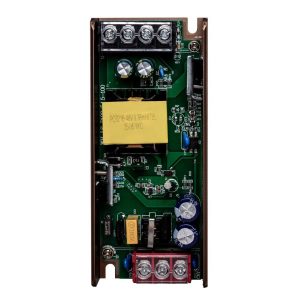
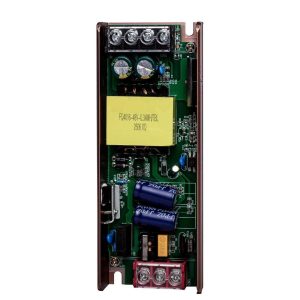
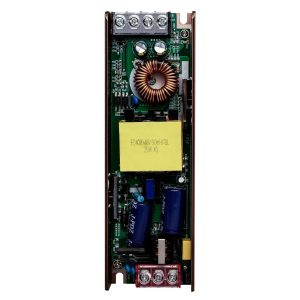
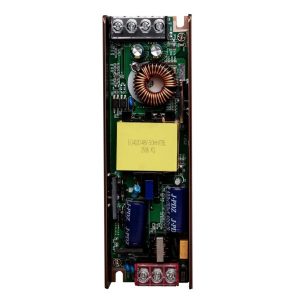
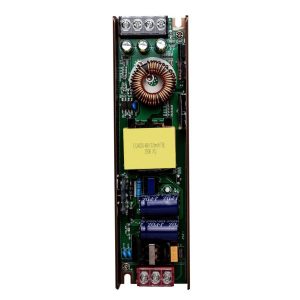
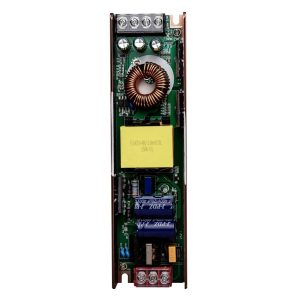
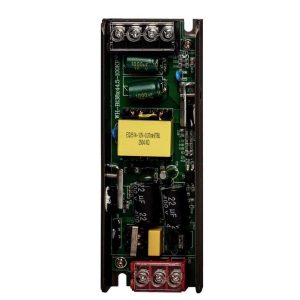
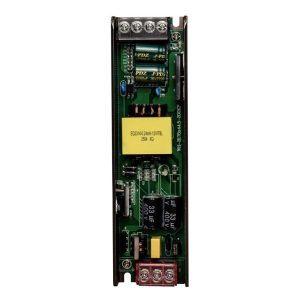
Component quality — capacitors, transformer and board determine the real, not the “nameplate”, service life.
12, 24 or 48 V: which to choose
Choosing the operating voltage is not a matter of taste but an engineering trade-off between current and voltage drop along the line. At the same power, the higher the voltage, the lower the current — and therefore the lower the losses and the more even the light along the whole strip.
Parameter
12 V
24 V
48 V
Current at the same power
highest
half that of 12 V
a quarter of that of 12 V
Voltage drop on a long line
significant
moderate
minimal
Maximum length of one run
short
medium
long
Use in stretch ceilings
short accent lighting, local areas
basic standard for perimeters and floating lines
long light lines, magnetic track systems
Load type
mass-market 12 V strips
most modern 24 V strips
specialised 48 V strips and track
Practical conclusion. 12 V suits short accents. For most stretch ceiling perimeters 24 V is optimal — lower current, more even light, simpler installation. Long main light lines and magnetic track systems use 48 V, where the voltage drop is practically unnoticeable.
Power and reserve: how many metres of strip a unit can handle
The main selection rule: the load should not exceed 70–80% of the unit’s rated power. In other words, a 20–30% reserve is added to the total strip power. This is not marketing but a condition of durability: a unit that constantly works “at the limit” heats up more and degrades faster.
The table below shows approximate strip lengths for units of different power — with the 30% reserve already included — for three typical consumption densities.
Unit power, W
Working load (30% reserve), W
Strip 4.8 W/m
Strip 9.6 W/m
Strip 14.4 W/m
Typical use
60~42~8 m~4 m~2.5 mniche accent lighting, short line
100~70~14 m~7 m~4.5 msmall room, perimeter outline
150~105~21 m~10 m~7 mmedium-sized room
200~140~29 m~14 m~9 mlarge room, floating outline
250~175~36 m~18 m~12 mspacious hall, several lines
300~210~43 m~21 m~14 mlarge room, commercial project
350~245~51 m~25 m~17 mlong main lines
400~280~58 m~29 m~19 mmaximum projects, combined outlines
How to use the table. First check the specific power of your strip (W/m) in its specification — it is higher for RGB and dense COB strips. Multiply by the length, add 30% and choose the nearest higher unit rating. If one line is very long, the solution is not only more power but also switching to 24/48 V or feeding the line from both ends to avoid voltage drop.
Form factor, IP and cooling: stretch ceiling specifics
Where general stores see just “a unit”, a stretch ceiling professional sees a set of constraints: the unit has to be hidden, heat has to be dissipated under the membrane, and there must be no hum in a quiet room. So the form factor here is not a secondary characteristic.
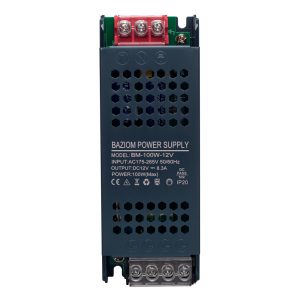
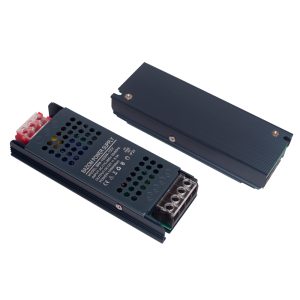
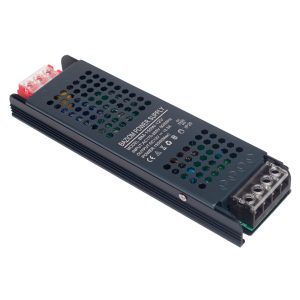
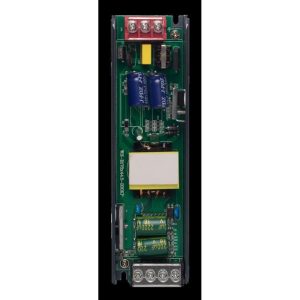
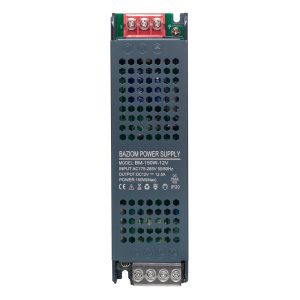
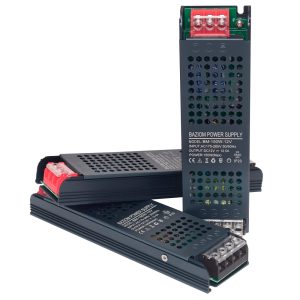
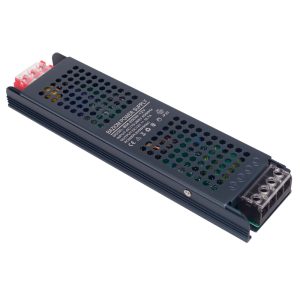
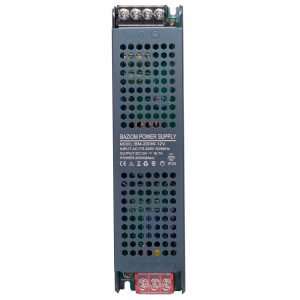
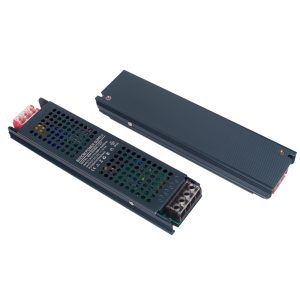
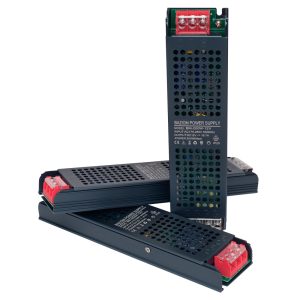
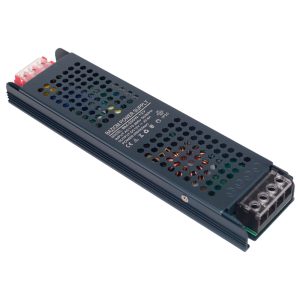
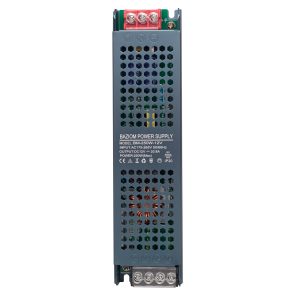
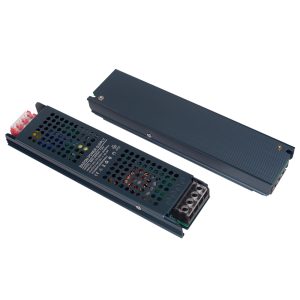
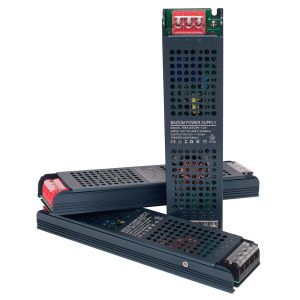
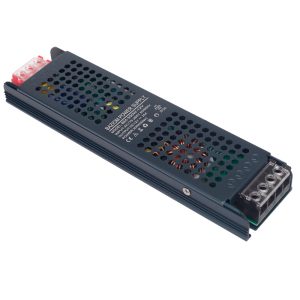
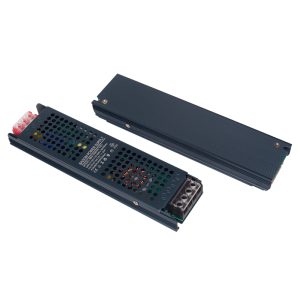
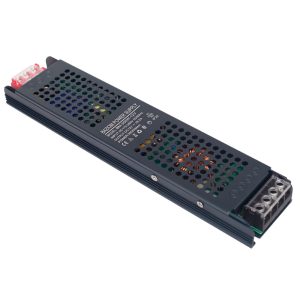
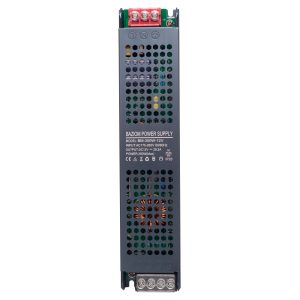
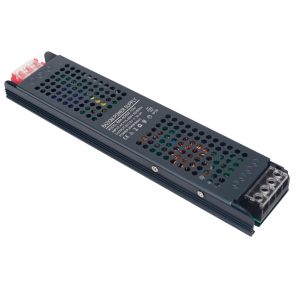
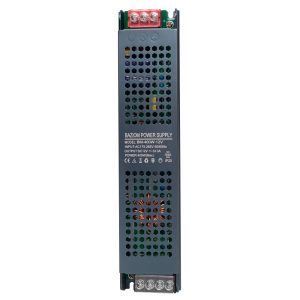
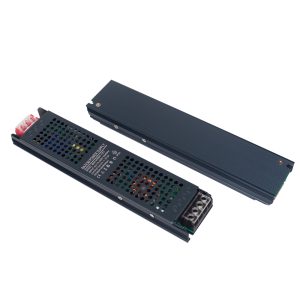
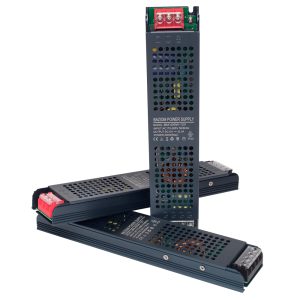
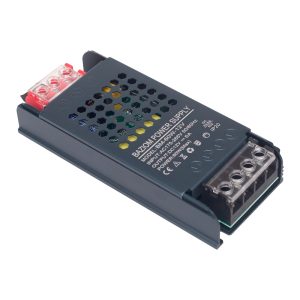
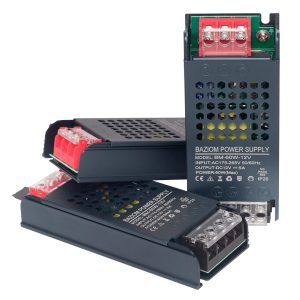
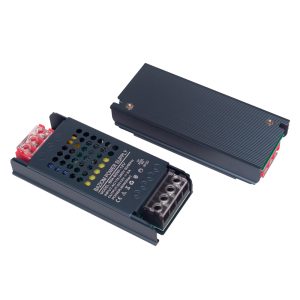
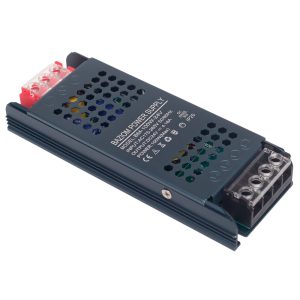
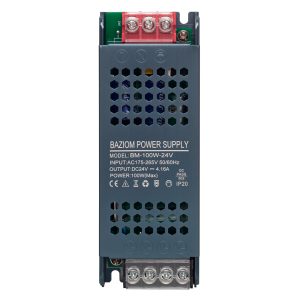
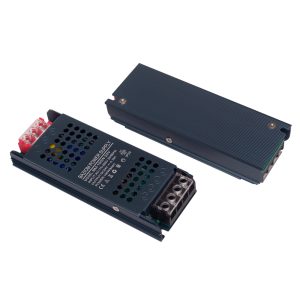
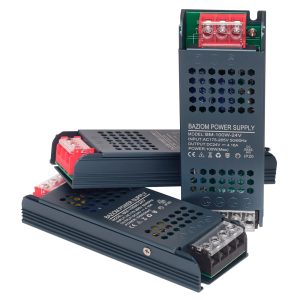
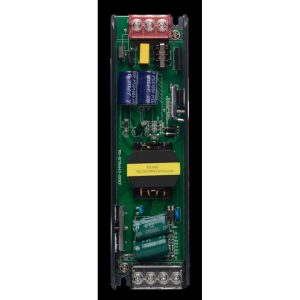
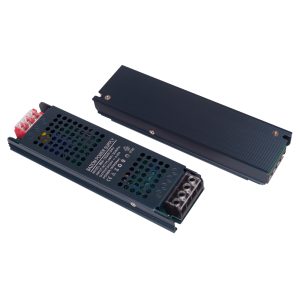
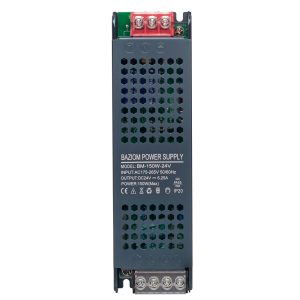
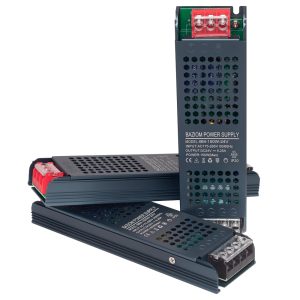
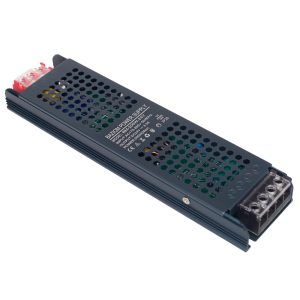
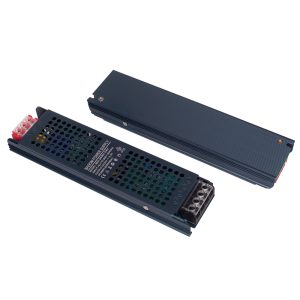
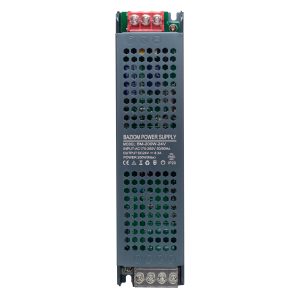
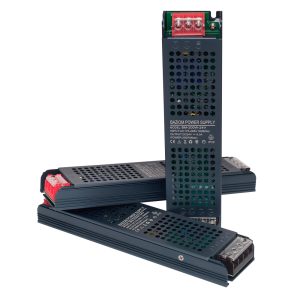
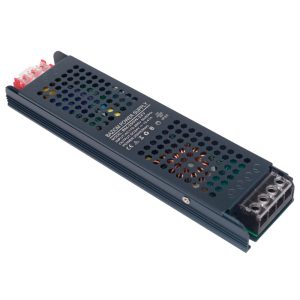
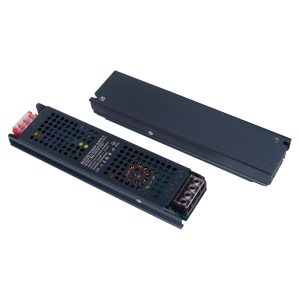
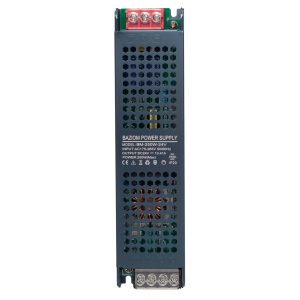
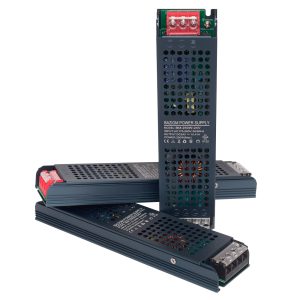
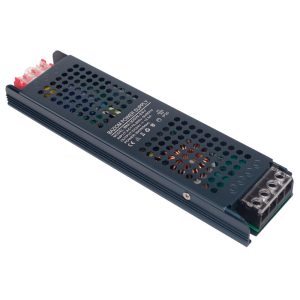
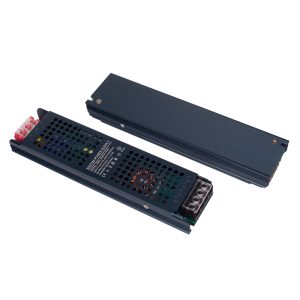
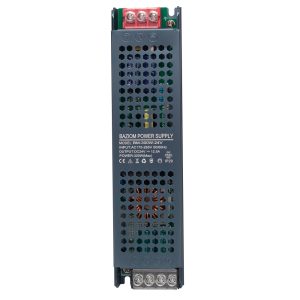
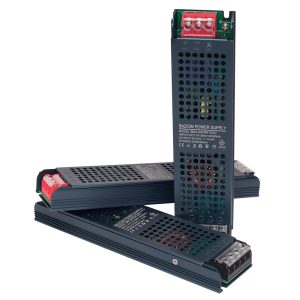
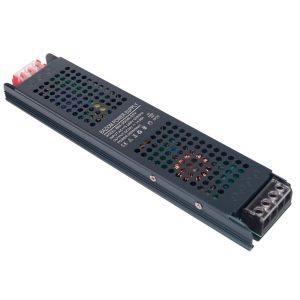
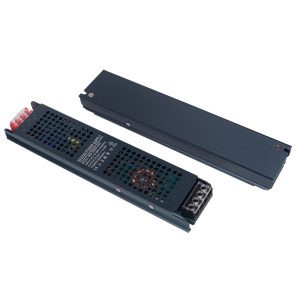
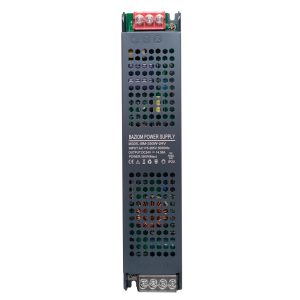
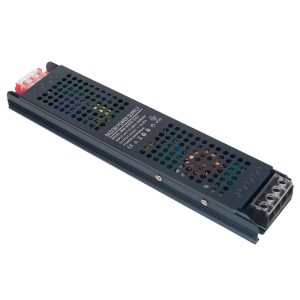
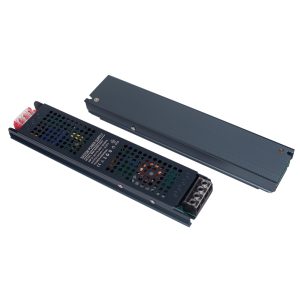
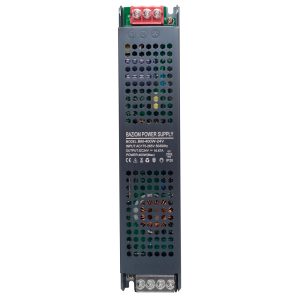
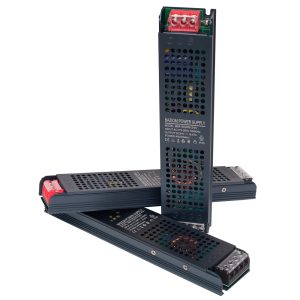
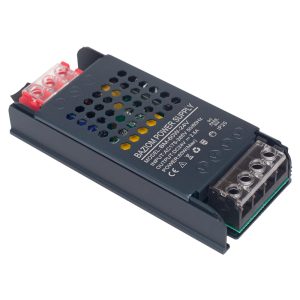
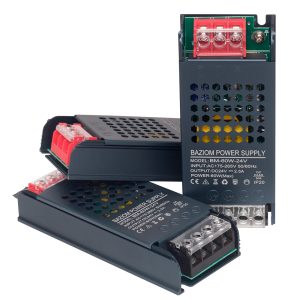
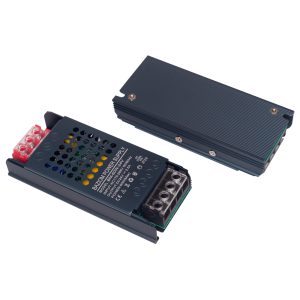
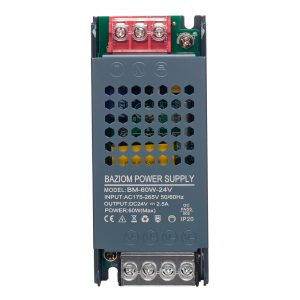
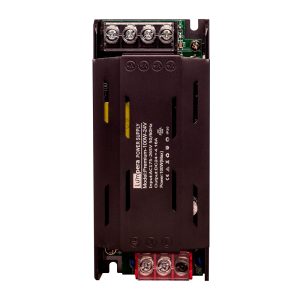
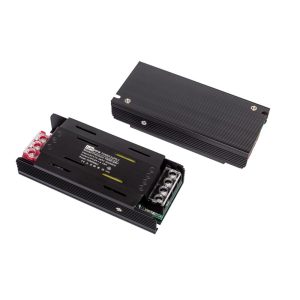
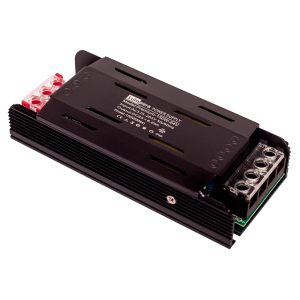
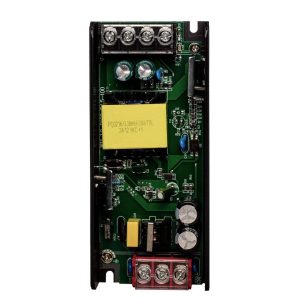
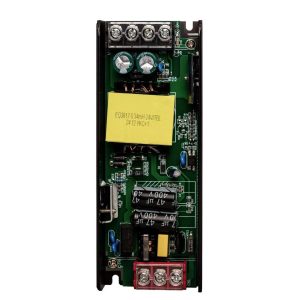
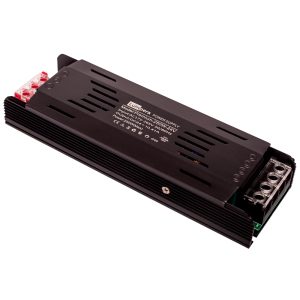
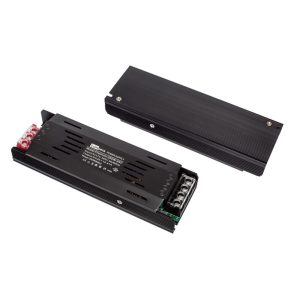
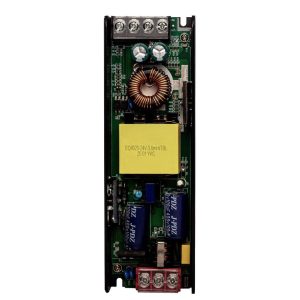
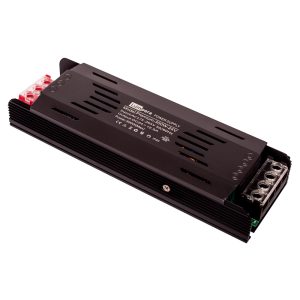
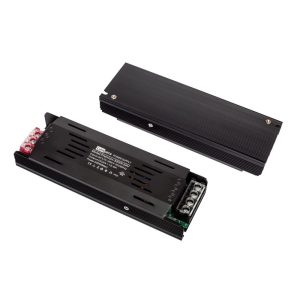
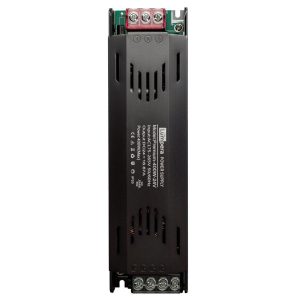
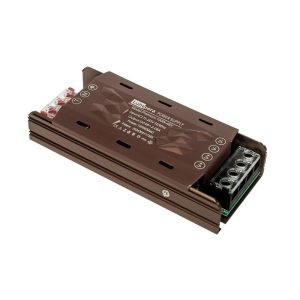
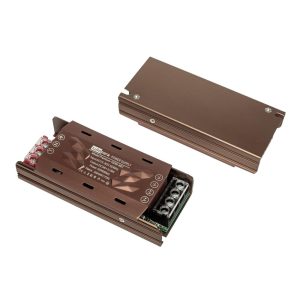
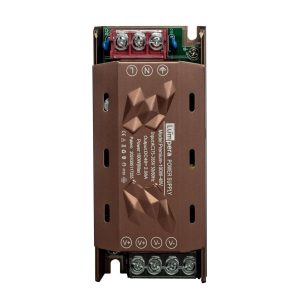
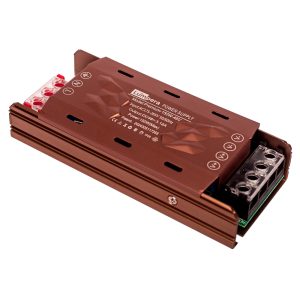
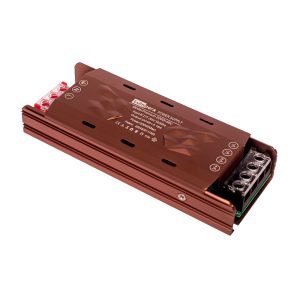
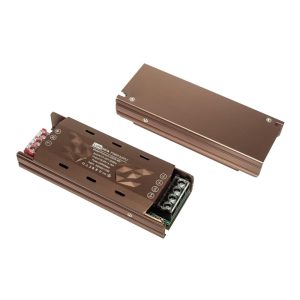
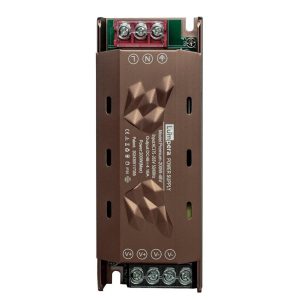
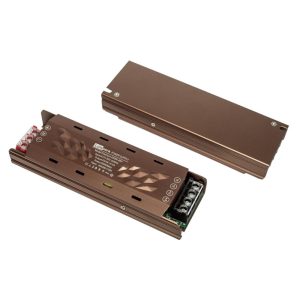
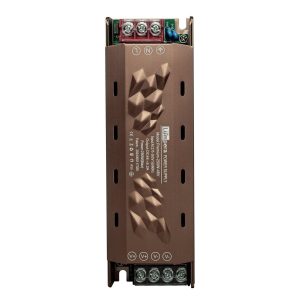
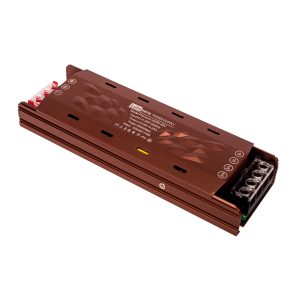
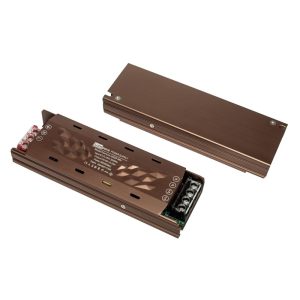
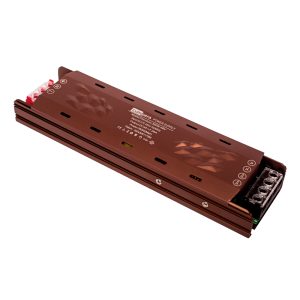
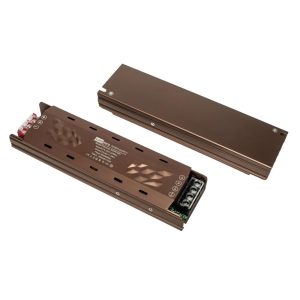
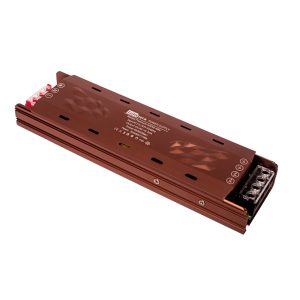
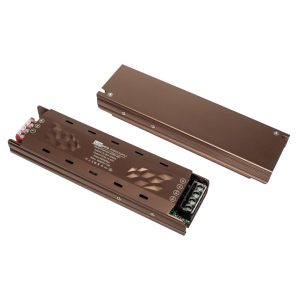
Compact units in a perforated housing — a universal solution for service niches: good cooling, optimal price.
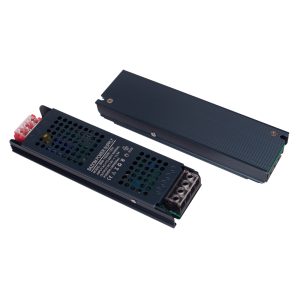
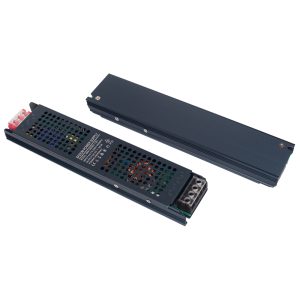
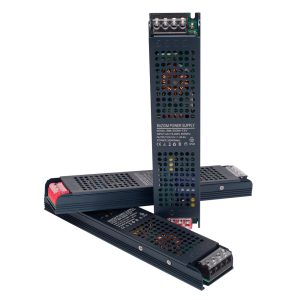
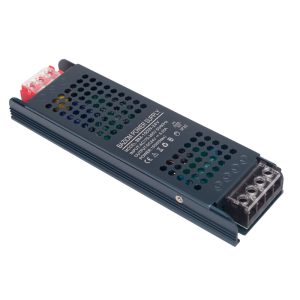
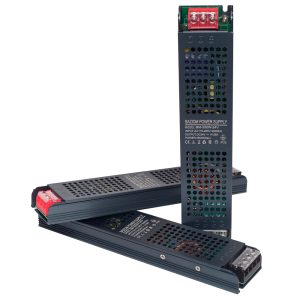
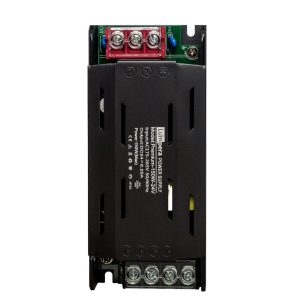
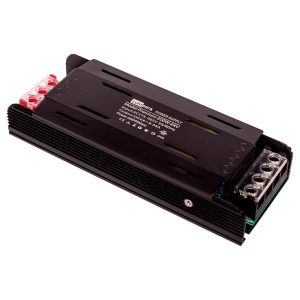
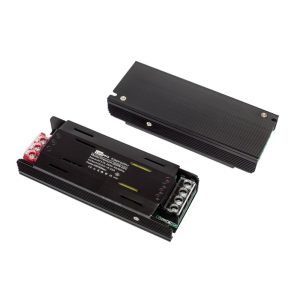
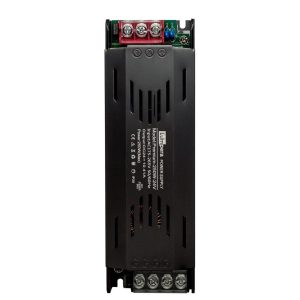
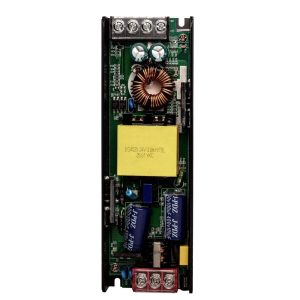
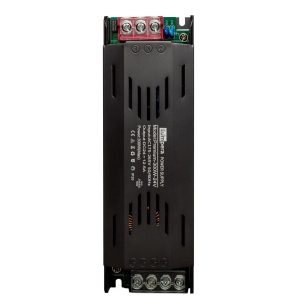
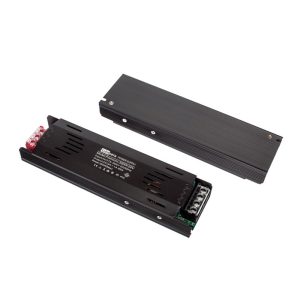
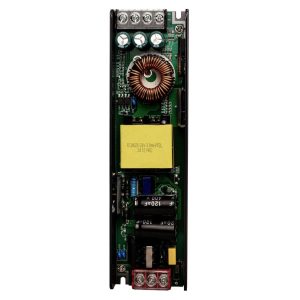
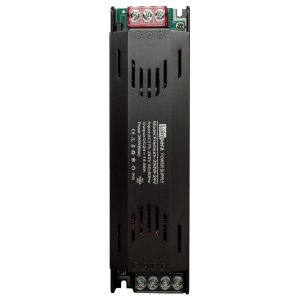
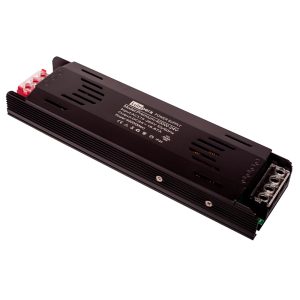
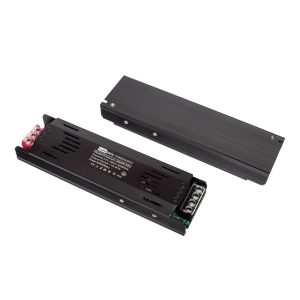
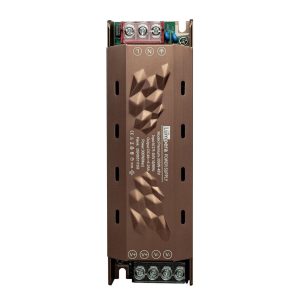
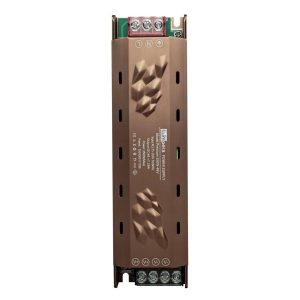
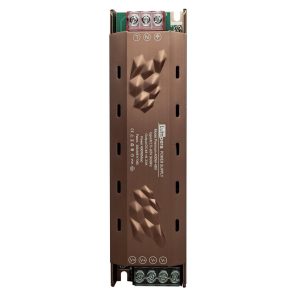
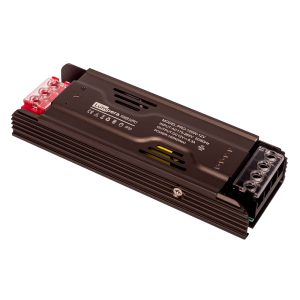
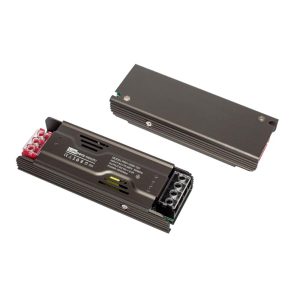
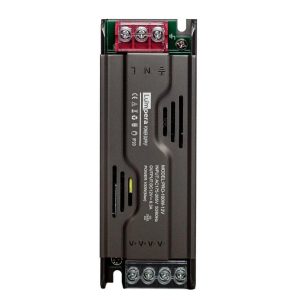
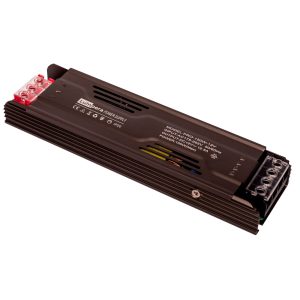
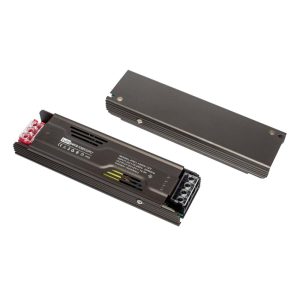
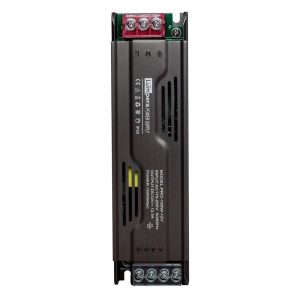
Ultra-slim units — for minimal clearance when space behind the membrane is tight.
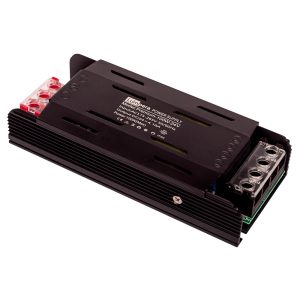
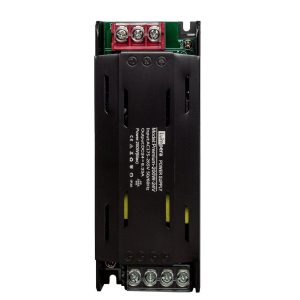
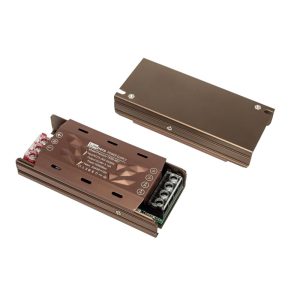
Units in a solid metal housing — a reinforced, long-life version for critical and commercial projects.
Sealed units (high IP) — for damp areas (bathroom, kitchen backsplash, outdoor perimeter).
In terms of protection, the vast majority of stretch ceiling units are IP20 (dry enclosed niches). For areas with moisture or dust, IP65–IP67 is chosen. For homes passive (silent) cooling is preferable; active cooling is appropriate for high-power units in technical and commercial premises.
For dimmable systems dimming compatibility matters: control is done via PWM on the controller side or with dimmable units — this is agreed with the strip and the controller at the design stage.
Series and brands in the catalogue
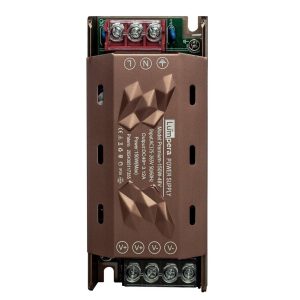
The range is built as a clear “basic → reinforced → premium” scale, so there is a suitable unit for every budget and project class. The catalogue includes Baziom, Lumpera and ArtLine brands and series for different tasks:
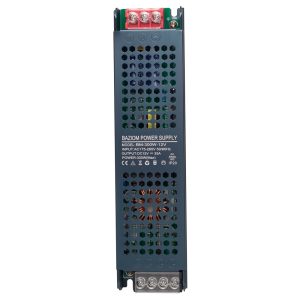
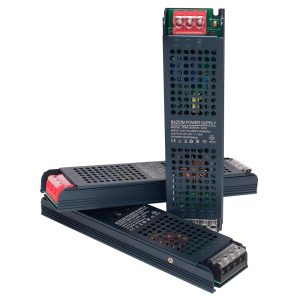
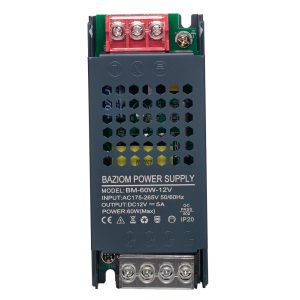
Baziom BM — a basic compact series for typical ceiling outlines: an optimal price-to-reliability ratio, 12 and 24 V, 60 to 400 W.
Lumpera Pro — a reinforced series for critical installations that need a margin in heat and stability.
Lumpera Premium — a premium version focused on efficiency, stability and silence; this is where the 48 V line for long light lines is offered.
Stick — an ultra-slim form factor for installation in minimal clearance.
Track20 / Track26 — solutions for track and magnetic lighting systems.
Range specifications
A brief guide to the catalogue range. The exact specifications of each model are on its product card.
LED strip power supplies: catalogue range
ParameterValue
Typeswitch-mode power supply with stabilised voltage (constant voltage)
Output voltage12 V · 24 V · 48 V
Power24, 36, 48, 60, 72, 100, 150, 200, 250, 300, 350, 400 W
BrandsBaziom · Lumpera · ArtLine
SeriesBM · Pro · Premium · Stick · Track20 · Track26
Protection ratingIP20 (dry niches) · IP65–IP67 (damp areas)
Coolingmostly passive, silent
Protectionshort circuit, overload, overvoltage and overheating
How to choose a power supply: step by step
Calculate the load. Strip specific power (W/m) × length (m) = total power.
Add a 20–30% reserve. The unit’s operating point should be no more than 70–80% of its rating.
Choose the voltage. 12 V for short accents; 24 V is the standard for outlines; 48 V for long lines and track.
Match the form factor to the niche. Compact, ultra-slim or metal — depending on the clearance behind the membrane.
Choose IP by environment. IP20 for dry niches, IP65–IP67 for damp areas.
Check cooling and noise. For homes — passive and silent.
Agree on dimming. If brightness control is needed, check compatibility with the strip and controller.
Choose the series by project class. Baziom BM for typical tasks; Lumpera Pro/Premium for critical and commercial projects.
For a complete solution the power supply is chosen together with the LED strip, profile and terminals — all in one catalogue of lighting components.
Price, availability and delivery
The current price and availability of each model are shown on its product card — the cost depends primarily on the power and series of the unit. LED strip power supplies can be bought with delivery throughout Ukraine; products are covered by the manufacturer’s warranty and service support.
If it is difficult to choose a unit yourself, our specialists will help calculate the power for your strip length and installation conditions — and suggest a suitable model from stock.
Why you can trust Pullsky
We are a manufacturer, not a reseller. Pullsky has been working since 2011 as a stretch ceiling manufacturer and a component supplier for dealers throughout Ukraine. The power supplies in our catalogue are part of complete stretch ceiling lighting solutions, not random items.
Practical experience. Every unit is selected for real installation conditions: a hidden niche behind the membrane, heat dissipation, silence, a form factor for the clearance. Feedback from our dealers’ installations shows which units really withstand operation in ceilings — and those are the ones we keep in the range.
Full-cycle support. Pullsky dealers receive not only products but also tools for sales and installation: the drawing program, selection advice, argon welding, warranty and service support, and clear delivery terms throughout Ukraine.
Frequently asked questions
How many metres of strip can a 100 W unit power?
With a 30% reserve the working load is about 70 W. That is roughly 14 m of an economical 4.8 W/m strip, 7 m of a standard 9.6 W/m strip or 4.5 m of a powerful 14.4 W/m strip. Calculate the exact length from the specific power of your particular strip.
What power reserve is needed?
Allow 20–30%. The unit should run at no more than 70–80% of its rating — that way it heats up less and lasts longer.
12 or 24 V for a stretch ceiling?
For most outlines and floating lines 24 V is optimal: lower current and less voltage drop along the line give more even light. 12 V is enough for short accent areas.
Can a power supply be installed under a stretch ceiling membrane?
Yes, but in a service niche with heat dissipation and access for maintenance. Choose a compact or ultra-slim unit with passive cooling and do not overload it.
Which IP rating should I choose?
For dry enclosed niches in homes — IP20. For a bathroom, kitchen backsplash or outdoor perimeter — IP65–IP67.
Why does the unit heat up or hum?
Overheating is a sign of overload or poor cooling: check the power reserve and the ventilation of the niche. Humming usually comes from cheap units with active cooling or units at the limit of their load; for homes choose silent models.
Is the unit suitable for brightness control?
Dimming is done via a PWM controller or a dimmable unit. Compatibility of the strip, controller and unit is agreed at the design stage.